
Why MPOD Testing Is Essential for Early Macular Degeneration Detection

Why MPOD Testing Is Essential for Early Macular Degeneration Detection
Age-related macular degeneration can develop gradually, often before noticeable vision changes occur. Because AMD affects the macula - the part of the retina responsible for sharp central vision - identifying risk factors early is an important part of protecting long-term eye health.
MPOD testing provides valuable information about the protective pigment within the macula. This information helps your eye doctor assess your risk for macular degeneration and develop a personalized plan for monitoring your retinal health.
What Is MPOD Testing?
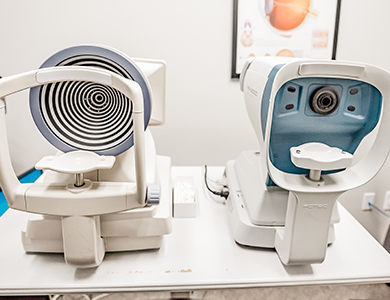
MPOD stands for macular pigment optical density. The test measures the concentration of macular pigment in the center of the retina. This pigment is primarily made up of lutein, zeaxanthin, and meso-zeaxanthin - nutrients that help protect the macula from oxidative stress and high-energy blue light.
MPOD testing is noninvasive and does not require contact with the eye. During the test, patients respond to light-based visual targets so the technology can calculate their macular pigment density.
Lower MPOD measurements may indicate that the macula has less natural protection. Although MPOD testing does not diagnose macular degeneration by itself, it provides an objective measurement that can be tracked over time.
Why Early Macular Degeneration Detection Matters
Age-related macular degeneration often develops without pain or obvious symptoms during its earliest stages. By the time central vision becomes blurry or straight lines begin to look distorted, changes may already be affecting the macula.
Early testing helps eye doctors identify patients who may benefit from closer observation, nutritional support, lifestyle adjustments, or additional retinal testing. Monitoring changes over time also allows your eye doctor to respond more quickly if signs of AMD begin to appear.
Who May Benefit From MPOD Testing?
MPOD testing can be useful for adults who want to better understand their macular health. It may be especially important for people with risk factors such as:
- A family history of age-related macular degeneration
- Increasing age
- Smoking or a history of smoking
- Low intake of leafy greens and antioxidant-rich foods
- Cardiovascular or circulatory concerns
- Previous retinal changes found during an eye exam
Your eye doctor can determine how often MPOD testing should be performed based on your health history, family history, and examination findings.
How MPOD Testing Supports a Comprehensive Eye Exam
A routine vision screening checks how clearly you see, but it does not provide a complete evaluation of the retina or macula. MPOD testing adds measurable information about the macula’s protective pigment and supports a more detailed assessment of AMD risk.
At Northeast Eye Care, MPOD testing may be combined with a comprehensive eye examination and other advanced testing. This approach allows the eye care team to evaluate retinal health, establish a baseline, and monitor for changes that may require additional attention.
Supporting Long-Term Macular Health
MPOD test results can help guide personalized recommendations for protecting central vision. Depending on your measurements and overall risk, your eye doctor may discuss dietary changes, nutritional supplements, smoking cessation, UV protection, or more frequent eye exams.
Because macular degeneration can progress quietly, proactive testing provides an opportunity to address risk factors before significant vision changes interfere with reading, driving, recognizing faces, or completing other daily activities.
Protect your central vision with a comprehensive eye exam and proactive MPOD testing at Northeast Eye Care in West Point, Oakland, or Pender, NE by calling (402) 372-3266.
Quick Links
Helpful Articles
article_category: products
article_category: psychiatry
article_category: faqs
article_category: cats
article_category: general
article_category: services
article_category: technology
article_category: dogs
article_category: restorative
article_category: vision therapy
article_category: contact lenses
article_category: health
article_category: conditions
article_category: eye surgery co-management
article_category: exotic
article_category: cosmetic
article_category: surgical procedures
article_category: aesthetics
article_category: preventative
article_category: ocular disease management
article_category: eyeglasses
article_category: eye health
article_category: large animal
[]
article_category: psychiatry
article_category: faqs
article_category: cats
article_category: general
article_category: services
article_category: technology
article_category: dogs
article_category: restorative
article_category: vision therapy
article_category: contact lenses
article_category: health
article_category: conditions
article_category: eye surgery co-management
article_category: exotic
article_category: cosmetic
article_category: surgical procedures
article_category: aesthetics
article_category: preventative
article_category: ocular disease management
article_category: eyeglasses
article_category: eye health
article_category: large animal
[]
Flowbite is an open-source library of interactive components built on top of Tailwind CSS including buttons, dropdowns, modals, navbars, and more.
Check out this guide to learn how to get started and start developing websites even faster with components on top of Tailwind CSS.
All Eye Care Services
Find personalized eye care excellence with our comprehensive services. From eye exams to advanced diagnostics, trust us for all your vision needs.
Keep In Touch
For non-urgent questions or to learn more about our services, contact us today!
West Point Office
- Monday 9:00am - 5:00pm
- Tuesday 9:00am - 5:00pm
- Wednesday 9:00am - 5:00pm
- Thursday 9:00am - 7:00pm
- Friday 9:00am - 4:00pm
- Saturday Closed
- Sunday Closed
Oakland Office
- Monday Closed
- Tuesday Closed
- Wednesday 9:30am – 5:00pm
- Thursday Closed
- Friday Closed
- Saturday Closed
- Sunday Closed
Pender Office
- Monday Closed
- Tuesday 9:30am – 5:00pm
- Wednesday Closed
- Thursday Closed
- Friday Closed
- Saturday Closed
- Sunday Closed
© 2026 Northeast Eye Care. All rights Reserved -
Accessibility Statement
-
Privacy Policy
-
Terms and Conditions
-
Sitemap
Managed and Designed by 